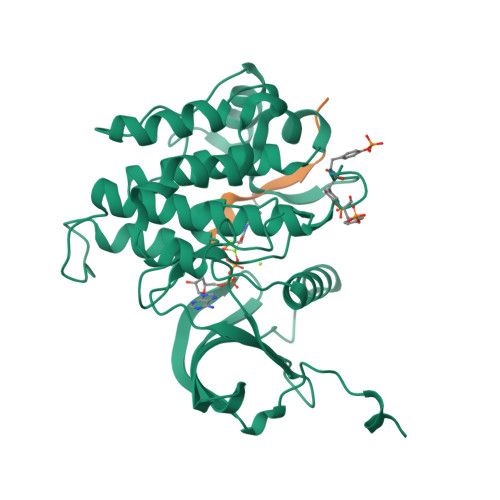
Insulin receptor
Homo sapiensTaxon: 9606
1382
아미노산
156.3 kDa
이론값
50
PDB 항목
5
기록됨
기능 설명
국재 및 분포
조직 특이성
Isoform Long and isoform Short are predominantly expressed in tissue targets of insulin metabolic effects: liver, adipose tissue and skeletal muscle but are also expressed in the peripheral nerve, kidney, pulmonary alveoli, pancreatic acini, placenta vascular endothelium, fibroblasts, monocytes, granulocytes, erythrocytes and skin. Isoform Short is preferentially expressed in fetal cells such as fetal fibroblasts, muscle, liver and kidney. Found as a hybrid receptor with IGF1R in muscle, heart, kidney, adipose tissue, skeletal muscle, hepatoma, fibroblasts, spleen and placenta (at protein level). Overexpressed in several tumors, including breast, colon, lung, ovary, and thyroid carcinomas
관련 질환
Rabson-Mendenhall syndrome
Severe insulin resistance syndrome characterized by insulin-resistant diabetes mellitus with pineal hyperplasia and somatic abnormalities. Typical features include coarse, senile-appearing facies, dental and skin abnormalities, abdominal distension, and phallic enlargement. Inheritance is autosomal recessive.
Leprechaunism
Represents the most severe form of insulin resistance syndrome, characterized by intrauterine and postnatal growth retardation and death in early infancy. Inheritance is autosomal recessive.
Type 2 diabetes mellitus
A multifactorial disorder of glucose homeostasis caused by a lack of sensitivity to insulin. Affected individuals usually have an obese body habitus and manifestations of a metabolic syndrome characterized by diabetes, insulin resistance, hypertension and hypertriglyceridemia. The disease results in long-term complications that affect the eyes, kidneys, nerves, and blood vessels.
Hyperinsulinemic hypoglycemia, familial, 5
A form of hyperinsulinemic hypoglycemia, a clinically and genetically heterogeneous disorder characterized by inappropriate insulin secretion from the pancreatic beta-cells in the presence of low blood glucose levels. HHF5 clinical features include loss of consciousness due to hypoglycemia and hypoglycemic seizures. HHF5 inheritance is autosomal dominant.
Insulin-resistant diabetes mellitus with acanthosis nigricans type A
Characterized by the association of severe insulin resistance (manifested by marked hyperinsulinemia and a failure to respond to exogenous insulin) with the skin lesion acanthosis nigricans and ovarian hyperandrogenism in adolescent female subjects. Women frequently present with hirsutism, acne, amenorrhea or oligomenorrhea, and virilization. This syndrome is different from the type B that has been demonstrated to be secondary to the presence of circulating autoantibodies against the insulin receptor.
아미노산 서열
MATGGRRGAAAAPLLVAVAALLLGAAGHLYPGEVCPGMDIRNNLTRLHELENCSVIEGHL
QILLMFKTRPEDFRDLSFPKLIMITDYLLLFRVYGLESLKDLFPNLTVIRGSRLFFNYAL
VIFEMVHLKELGLYNLMNITRGSVRIEKNNELCYLATIDWSRILDSVEDNYIVLNKDDNE
ECGDICPGTAKGKTNCPATVINGQFVERCWTHSHCQKVCPTICKSHGCTAEGLCCHSECL
FASTA 형식 · 1382 아미노산 · 분자량 156.3 kDa
실험 구조
50 PDB 항목번역 후 수식
- •After being transported from the endoplasmic reticulum to the Golgi apparatus, the single glycosylated precursor is further glycosylated and then cleaved, followed by its transport to the plasma membrane
- •Autophosphorylated on tyrosine residues in response to insulin (PubMed:14690593, PubMed:16246733, PubMed:16271887, PubMed:18278056, PubMed:18767165, PubMed:3166375, PubMed:9312016). Phosphorylation of Tyr-999 is required for binding to IRS1, SHC1 and STAT5B (PubMed:14690593, PubMed:16246733, PubMed:16271887, PubMed:18278056, PubMed:18767165, PubMed:3166375, PubMed:9312016). Dephosphorylated by PTPRE at Tyr-999, Tyr-1185, Tyr-1189 and Tyr-1190 (PubMed:14690593, PubMed:16246733, PubMed:16271887, PubMed:18278056, PubMed:18767165, PubMed:3166375, PubMed:9312016). May also be phosphorylated at Tyr-1185 and Tyr-1190 by mTORC2 (PubMed:26584640). Dephosphorylated by PTPRF and PTPN1 (PubMed:8995282). Dephosphorylated by PTPN2; down-regulates insulin-induced signaling (PubMed:10734133, PubMed:12612081). Dephosphorylation at Tyr-1189 and Tyr-1190 requires the SH2/SH3 adapter protein NCK1, probably to recruit its interaction partner PTPN1 (PubMed:21707536)
- •S-nitrosylation at Cys-1083 by BLVRB inhibits the receptor tyrosine kinase, thereby inhibiting insulin signaling
- •Ubiquitinated by MARCHF1; leading to degradation thereby reducing surface INSR expression