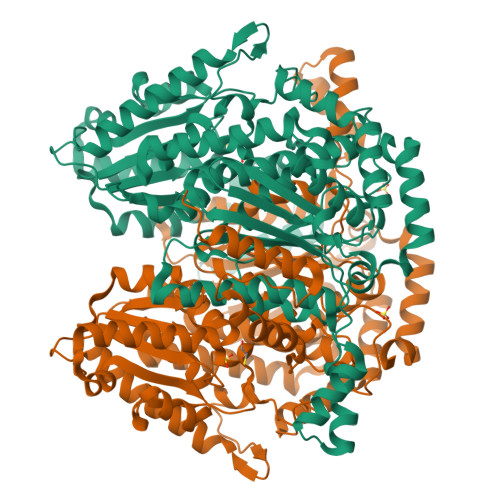
P06744
G6PI_HUMANGPI
Glucose-6-phosphate isomerase
Homo sapiensTaxon: 9606
3D-structureAcetylationAlternative splicingCytokineCytoplasmDirect protein sequencingDisease variantGluconeogenesisGlycolysisGrowth factorHereditary hemolytic anemiaHydroxylation+6
Sequence Length
558
amino acids
Molecular Weight
63.1 kDa
theoretical
Experimental Structures
13
PDB entries
Related Diseases
1
recorded
Function
Isomerase that catalyzes the conversion of alpha-D-glucose-6-phosphate to beta-D-fructose-6-phosphate, the second step in glycolysis, and the reverse reaction in gluconeogenesis, within the cytoplasm (PubMed:28803808). Also shows C2-epimerase activity, interconverting D-glucose-6-phosphate (G6P) and D-mannose-6-phosphate (M6P) (By similarity). Also displays anomerase activity, interconverting alpha and beta-anomeric forms of G6P, D-fructose-6-phosphate and M6P (By similarity). In addition to its metabolic role, this enzyme functions extracellularly as a cytokine: acts as autocrine motility factor (AMF), a secreted angiogenic factor that enhances endothelial cell motility (PubMed:11437381). Functions as neuroleukin, a neurotrophic factor supporting the survival of spinal and sensory neurons (PubMed:11004567, PubMed:3352745). Released by lectin-stimulated T-cells to induce immunoglobulin secretion (PubMed:11004567, PubMed:3352745)
Related Diseases
Anemia, congenital, non-spherocytic hemolytic, 4
An autosomal recessive form of anemia in which there is no abnormal hemoglobin or spherocytosis. It is caused by glucose phosphate isomerase deficiency.
Amino Acid Sequence
MAALTRDPQFQKLQQWYREHRSELNLRRLFDANKDRFNHFSLTLNTNHGHILVDYSKNLV
TEDVMRMLVDLAKSRGVEAARERMFNGEKINYTEGRAVLHVALRNRSNTPILVDGKDVMP
EVNKVLDKMKSFCQRVRSGDWKGYTGKTITDVINIGIGGSDLGPLMVTEALKPYSSGGPR
VWYVSNIDGTHIAKTLAQLNPESSLFIIASKTFTTQETITNAETAKEWFLQAAKDPSAVA
FASTA format · 558 amino acids · mass 63.1 kDa
Experimental Structures
13 PDB entries1IAT1IRI1JIQ1JLH1NUH6XUH6XUI8BBH8P2K9FCW9FHF9FKC9FKF
Post-Translational Modifications
- •Phosphorylation at Ser-185 by CK2 has been shown to decrease enzymatic activity and may contribute to secretion by a non-classical secretory pathway
- •ISGylated