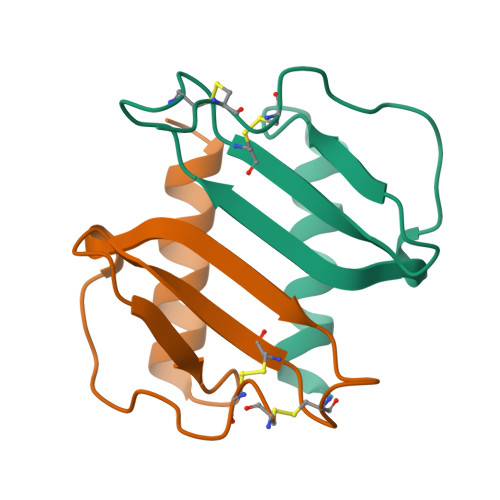
P10145
IL8_HUMANCXCL8
Interleukin-8
Homo sapiensTaxon: 9606
3D-structureChemotaxisCitrullinationCytokineDirect protein sequencingDisulfide bondInflammatory responseProteomics identificationReference proteomeSecretedSignal
Sequence Length
99
amino acids
Molecular Weight
11.1 kDa
theoretical
Experimental Structures
21
PDB entries
Related Diseases
0
recorded
Function
Chemotactic factor that mediates inflammatory response by attracting neutrophils, basophils, and T-cells to clear pathogens and protect the host from infection (PubMed:18692776, PubMed:7636208). Also plays an important role in neutrophil activation (PubMed:2145175, PubMed:9623510). Released in response to an inflammatory stimulus, exerts its effect by binding to the G-protein-coupled receptors CXCR1 and CXCR2, primarily found in neutrophils, monocytes and endothelial cells (PubMed:1840701, PubMed:1891716). G-protein heterotrimer (alpha, beta, gamma subunits) constitutively binds to CXCR1/CXCR2 receptor and activation by IL8 leads to beta and gamma subunits release from Galpha (GNAI2 in neutrophils) and activation of several downstream signaling pathways including PI3K and MAPK pathways (PubMed:11971003, PubMed:8662698)
趋化因子通过吸引中性粒细胞、嗜碱性粒细胞和 T 细胞来清除病原体并保护宿主免受感染,从而介导炎症反应 (PubMed:18692776、PubMed:7636208)。 在中性粒细胞激活中也发挥重要作用 (PubMed:2145175、PubMed:9623510)。 响应炎症刺激而释放,通过与 G 蛋白偶联受体 CXCR1 和 CXCR2 结合发挥作用,主要存在于中性粒细胞、单核细胞和内皮细胞中 (PubMed:1840701、PubMed:1891716)。 G 蛋白异三聚体(α、β、γ 亚基)与 CXCR1/CXCR2 受体组成型结合,IL8 激活会导致 Gα(中性粒细胞中的 GNAI2)释放 β 和 γ 亚基,并激活包括 PI3K 和 MAPK 途径在内的多个下游信号传导途径 (PubMed:11971003、PubMed:8662698)
您所阅读的中文介绍为AI翻译机制自动翻译,并未经过人工审核,如有错漏,请以英文原文为准!
Amino Acid Sequence
MTSKLAVALLAAFLISAALCEGAVLPRSAKELRCQCIKTYSKPFHPKFIKELRVIESGPH
CANTEIIVKLSDGRELCLDPKENWVQRVVEKFLKRAENS
FASTA format · 99 amino acids · mass 11.1 kDa
Experimental Structures
21 PDB entries1ICW1IKL1IKM1IL81ILP1ILQ1QE61ROD2IL83IL84XDX5D145WDZ6LFM6LFO6N2U6WZM6XMN8IC08XWN8XX6
Post-Translational Modifications
- •Several N-terminal processed forms are produced by proteolytic cleavage after secretion from at least peripheral blood monocytes, leukcocytes and endothelial cells. In general, IL-8(1-77) is referred to as interleukin-8. IL-8(6-77) is the most promiment form
- •Citrullination at Arg-27 prevents proteolysis, and dampens tissue inflammation, it also enhances leukocytosis, possibly through impaired chemokine clearance from the blood circulation
- •(Microbial infection) Cleaved by group A Streptococcus protease SpyCEP; leading to impaired neutrophil endothelial transmigration and thus increased virulence